contents
If you're asking about packaging design cost in India, the honest number runs anywhere from ₹5,000 to ₹15,00,000 and up — and unlike a logo, a bad answer here doesn't just look wrong, it gets printed 50,000 times before anyone notices. Packaging isn't branding with a die-cut edge. It has to survive a printing press, a converter's machine, an FSSAI label check, and a phone screen before it ever gets to look nice.
packaging design cost in india, three ways to spend it
We've already laid out branding cost in India; packaging shares the shape but carries one constraint branding never answers to — a printing press doesn't care about your mood board.
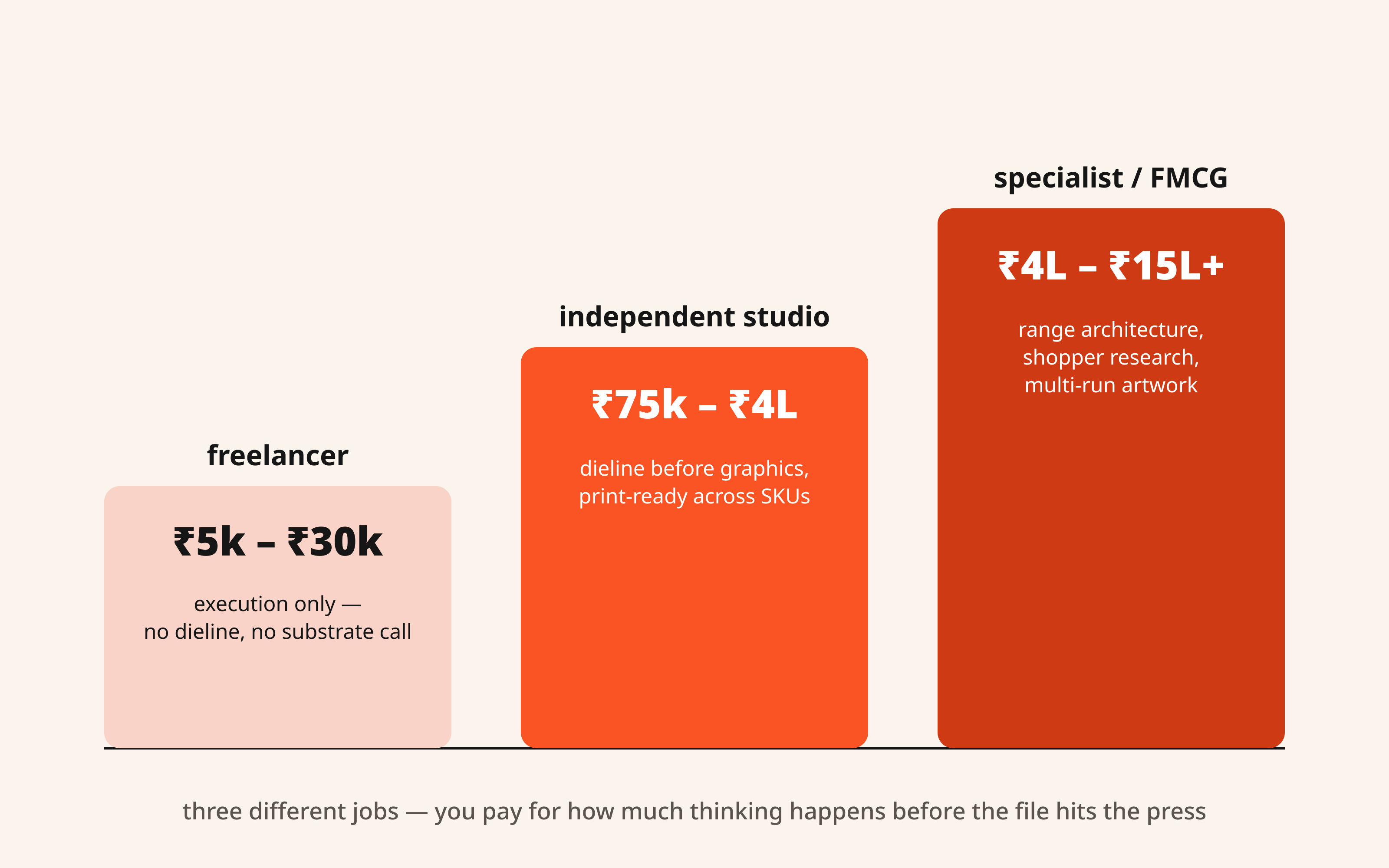
Freelancer or marketplace, single label or pack: roughly ₹5,000 – ₹30,000. This buys a label that looks fine in a mockup. It rarely comes with a dieline built for your actual converter, an opinion on your substrate, or any real interrogation of where the pack will sit — a crowded kirana shelf and a 400px Amazon thumbnail are two different design problems, and a ₹10,000 job usually answers neither.
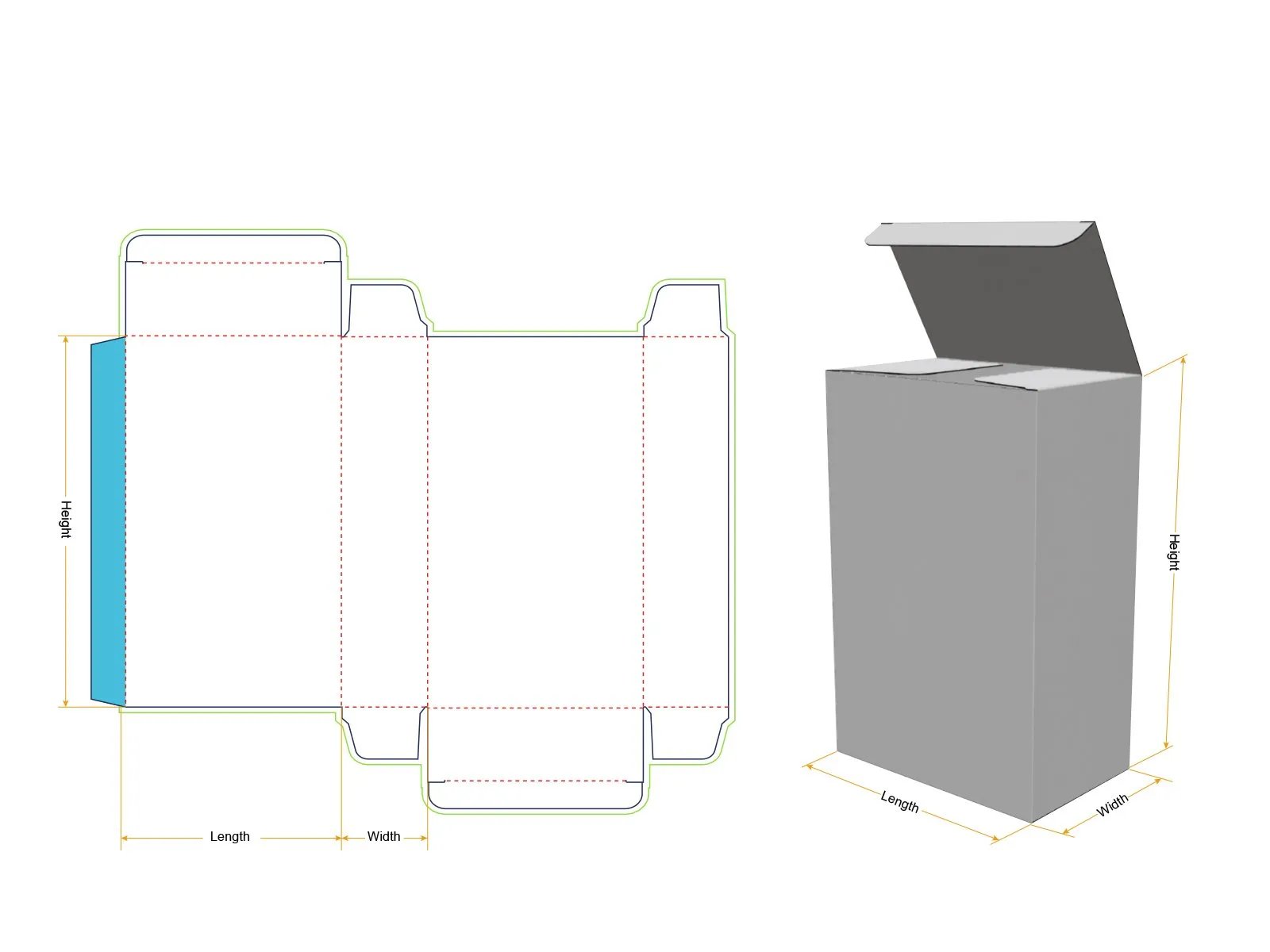
Independent studio packaging system: roughly ₹75,000 – ₹4,00,000. Here the dieline gets drawn before the graphics, not after. A studio at this level asks what you're printing on, how many SKUs need to read as one family from three metres away, and what happens to your colours when they move from a screen to an offset press. You're paying for a print-ready file that survives contact with a factory floor.
Specialist or FMCG packaging agency: roughly ₹4,00,000 – ₹15,00,000+. At this range you're commissioning range architecture across a full SKU line, shopper research on what actually gets picked up versus scrolled past, and artwork engineered across every print run and pack format you'll need. Some of that is genuinely necessary if you're launching twenty SKUs into modern trade. Some of it is a research deck nobody on the factory floor ever reads.
what you're actually paying for is a pack that survives contact with reality
A pack that looks perfect in a PDF and a pack that looks perfect coming off a press are two different achievements, and most pricing guides only price the first one. The dieline has to fit the converter's die. The colours have to hold on the exact ink and substrate you're using, not the sRGB values on your monitor. The FSSAI-mandated details have to fit inside a hierarchy that still looks designed, not bolted on. None of that shows up in a mockup, and all of it is the actual job — which is why the packaging design process at a working studio starts with material and print constraints, not a mood board.
“A pack isn't finished when it looks good in a PDF. It's finished when it survives the press, the converter's machine, and a thumb scrolling past it on Amazon.”
when each is right
- A freelancer makes sense when you have one SKU, a settled substrate and print method, and you just need someone to execute cleanly — not question the brief.
- A studio makes sense when you're launching a range, not a single SKU, and the pack needs to survive shelf comparison against three competitors doing the same beige minimalism.
- An agency makes sense when you're going into modern trade or export with dozens of SKUs and print runs across multiple facilities, where colour drift at one factory can mean a rejected batch.
- Your printer's 'free' design makes sense when it doesn't — it's the most common false economy in Indian packaging, and it's free because the cost is folded into a print run you can no longer renegotiate.
the hidden cost of cheap: reprints, moq waste, rejected batches
The ₹15,000 pack has a real price. It's just deferred to the moment your converter says the dieline doesn't fit their machine, or the press proof comes back three shades warmer than the screen promised — and you're already committed to a minimum order quantity of 10,000 or 50,000 units. A reprint isn't a design revision. It's wasted stock, a delayed launch, and sometimes units you legally can't sell because the FSSAI net-quantity declaration was set in an eight-point font nobody checked against the regulation.
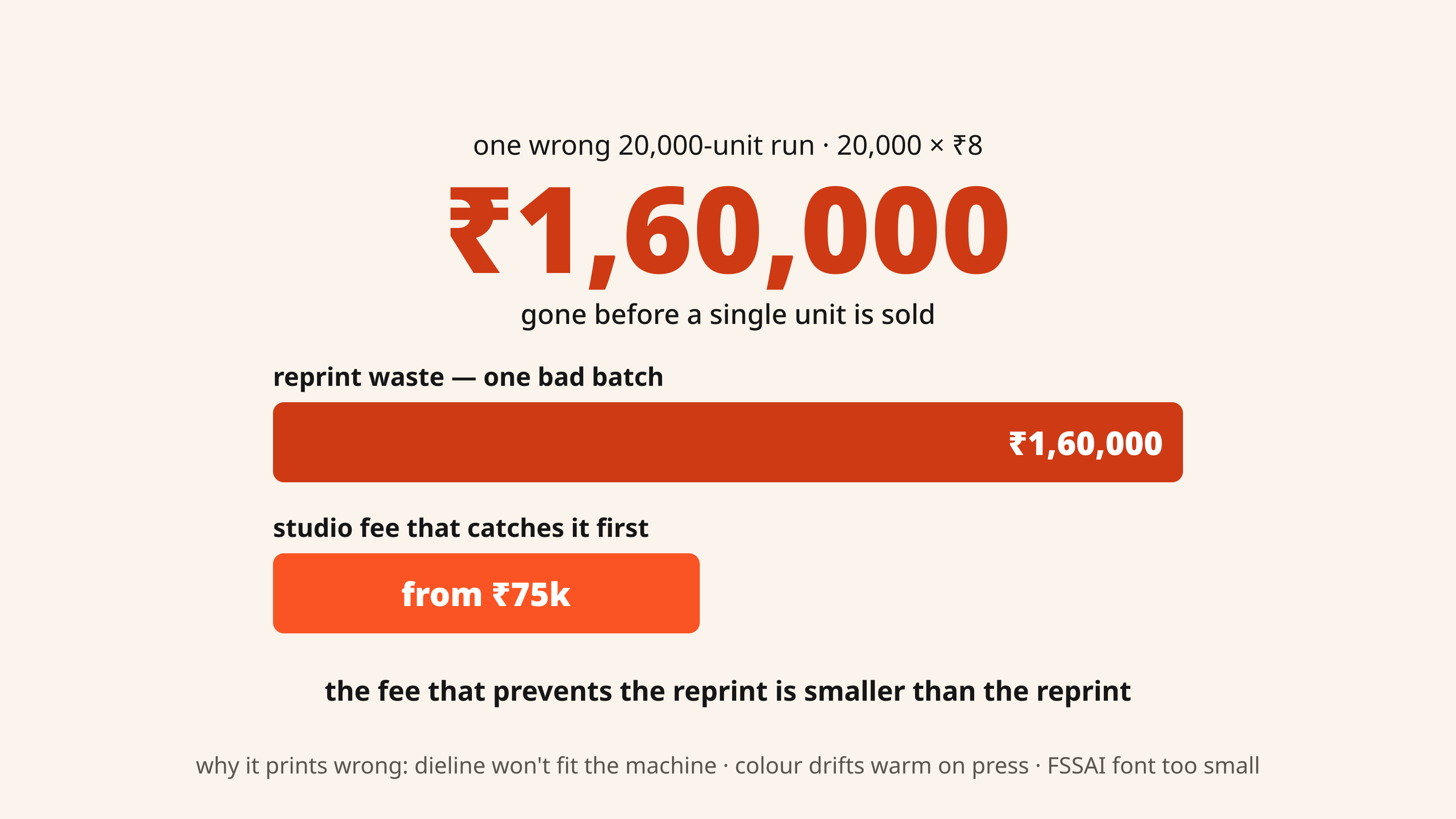
Run the maths: a 20,000-unit print run at even a modest ₹8 a unit is ₹1,60,000 gone the moment the batch is wrong. That's more than the entire fee for the independent-studio tier that would have caught the substrate and dieline problem before the file ever went to press.
how to scope the brief so you don't pay twice
- Name your SKU count and print run upfront. Pricing for one label is not pricing for a twelve-SKU range that has to read as one family across three pack formats.
- Ask what happens after the design file is done. A studio that hands over a JPEG and vanishes is priced like a freelancer, whatever the invoice says. One that manages the file through pre-press and print approval is doing a materially different job.
- Decide the substrate and print method before you take quotes, not after. Flexo, offset, digital, and gravure each carry different tolerances — a design that's gorgeous on a digital proof can print muddy on flexo at scale.
- Ask who owns the FSSAI compliance review. If nobody on the team is checking your label against the actual regulation, that job is now yours, and it's a job that can hold up a shipment.
- Look at our services or just talk to us before you brief three vendors separately — the fastest way to overpay is to scope a freelancer's job and an agency's job as if they're the same brief.
quick answers
how much does packaging design cost in india?
Anywhere from ₹5,000 for a single freelance label to ₹15,00,000+ for a full FMCG range system. The number that matters isn't the fee — it's whether dielines, substrate, and print method were considered before the artwork was drawn, because that's what separates a design that ships from one that gets bounced back by the converter.
does good packaging design actually pay for itself?
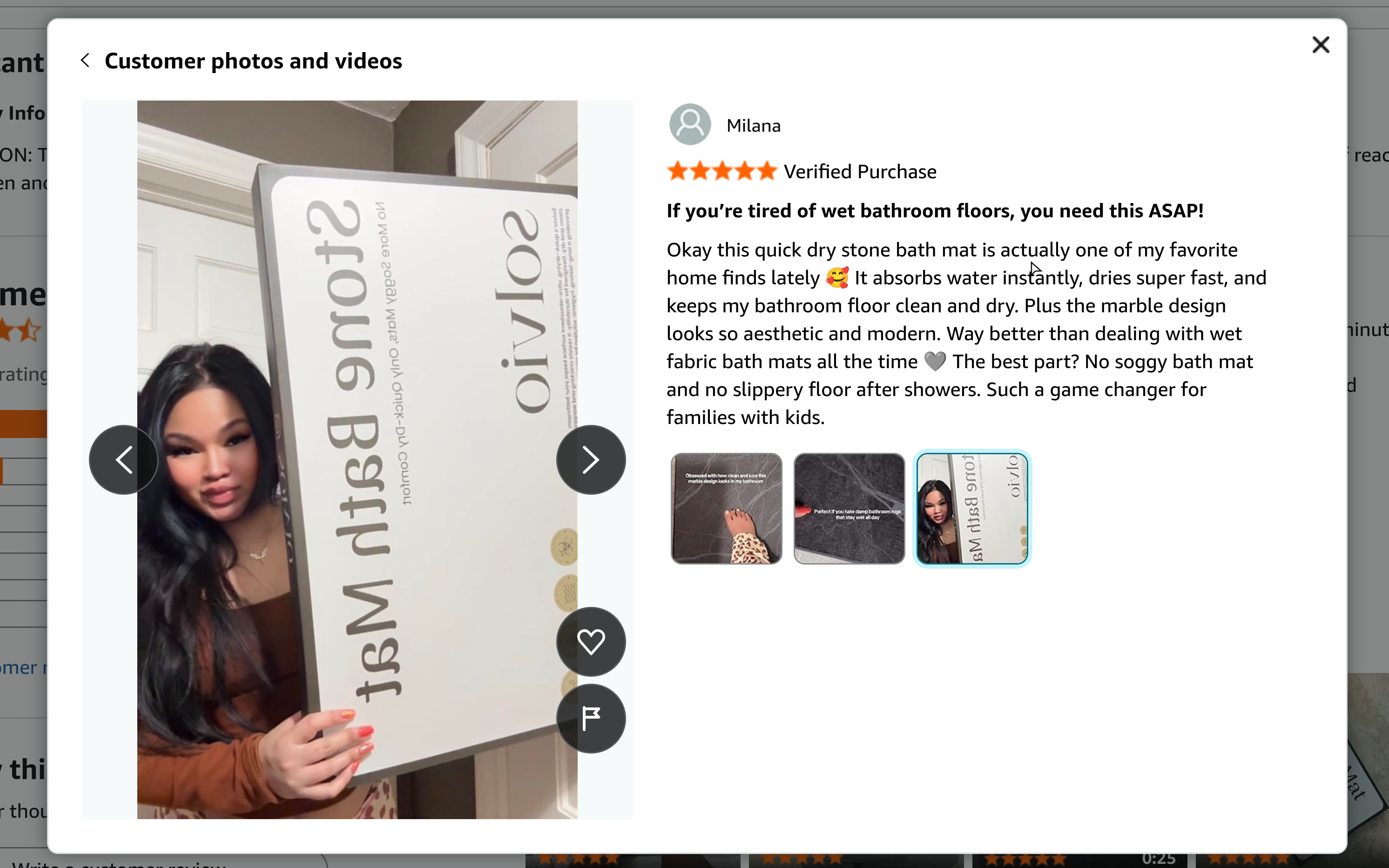
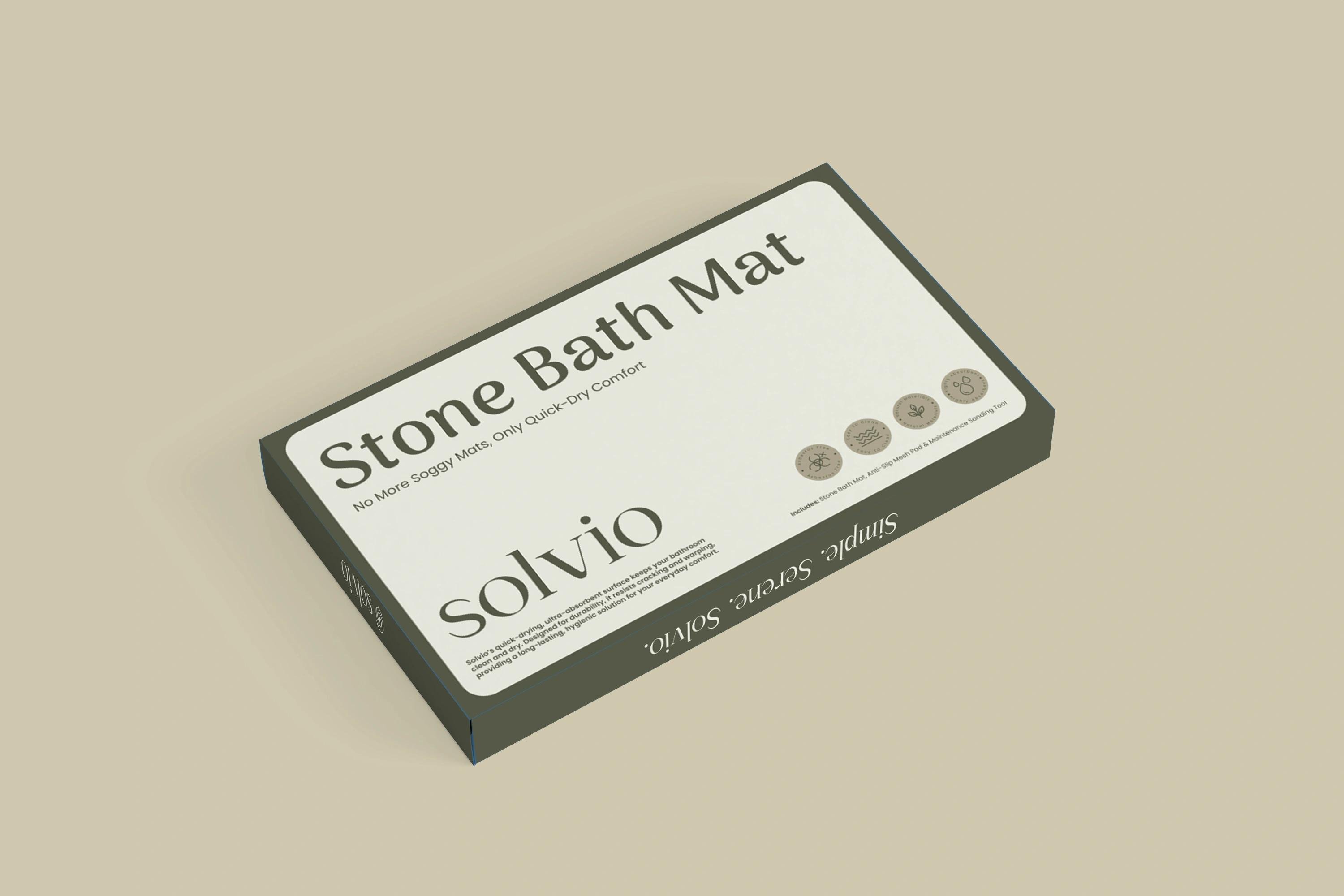
When it's built around how the pack is actually encountered — a thumbnail on a phone screen, a three-second glance on a shelf — yes. Solvio's spa-inspired packaging helped carry a single product to roughly $600k in revenue in six months on Amazon, on a listing where the pack does the job an advert usually does.
should i use a freelancer or a studio for packaging?
It depends on scope, not budget. One SKU with a settled substrate and print method is freelancer territory. Anything with more than a few SKUs, a range hierarchy, or an FSSAI label you haven't stress-tested belongs with a studio that treats the dieline as part of the design, not an afterthought for the printer to sort out.
can i start with cheap packaging and redo it later?
Only if you're printing small. The moment you commit to a real minimum order quantity — 10,000, 30,000, 50,000 units — a redo stops being a revision and becomes a write-off. Print exactly what you can sell through before the redesign, or pay the studio-tier fee upfront and skip the write-off entirely.
The honest summary: packaging design cost in India isn't one number, it's a bet on how much reality you want considered before the file goes to press. A freelancer bets that you already know your substrate, your print method, and your compliance requirements. A studio bets that the dieline, the shelf test, and the reprint maths are worth paying for once instead of learning the expensive way. Pay for the thinking now, or pay for the reprint later — the invoice arrives either way.

got a project in mind?
we turn thinking like this into brands that actually ship. tell us what you’re working on.