contents
Brand identity is the sum of deliberate choices — story, name, voice, visuals, behaviour — that make a brand recognisable and repeatable. It is not a logo. A logo is one output of it.
Most founders who ask us "what is brand identity?" are really asking "do I need a new logo?" The honest answer is usually no. You need the system the logo sits inside — the thing that makes a customer recognise you on a shelf, in a feed, or in an email before they've read your name.
This post is the answer we give in the room: what identity actually is, the three things it gets confused with, and the six elements that do the real work.
the definition that actually helps
Think of brand identity the way you think of a person's identity. Not their face — the whole of them. How they speak, what they wear, what they refuse to do, what they're known for. You can recognise a friend from a text message with no name attached. That's identity working.

A brand's identity is the same mechanism, built on purpose: a set of decisions made once, written down, and repeated until the market can recognise the brand from any single fragment — a colour, a sentence, a package on a shelf.
The key word is deliberate. Every business already projects something. Identity work is deciding what that something is, instead of letting it happen by accident.
what brand identity isn't
Three confusions account for most wasted branding money. Worth clearing up before any pixel moves.
it isn't your logo
A logo is a signature, not a personality. Useful, compact, legally protectable — and completely mute on its own. Nike's swoosh means something because of forty years of behaviour behind it, not because the mark is clever. A new logo on a confused brand is a new door on a house with no foundation.
it isn't your brand image
Identity is what you intend to project. Image is what people actually perceive. The gap between the two is where brand work lives. You control identity directly; you only influence image — through consistency, over time. If your image is bad, the fix is rarely cosmetic.
it isn't branding
Branding is the verb — the activity of building and expressing the identity. Identity is the asset that activity produces. Agencies sell branding; what you should be buying is an identity.
the six elements that do the work
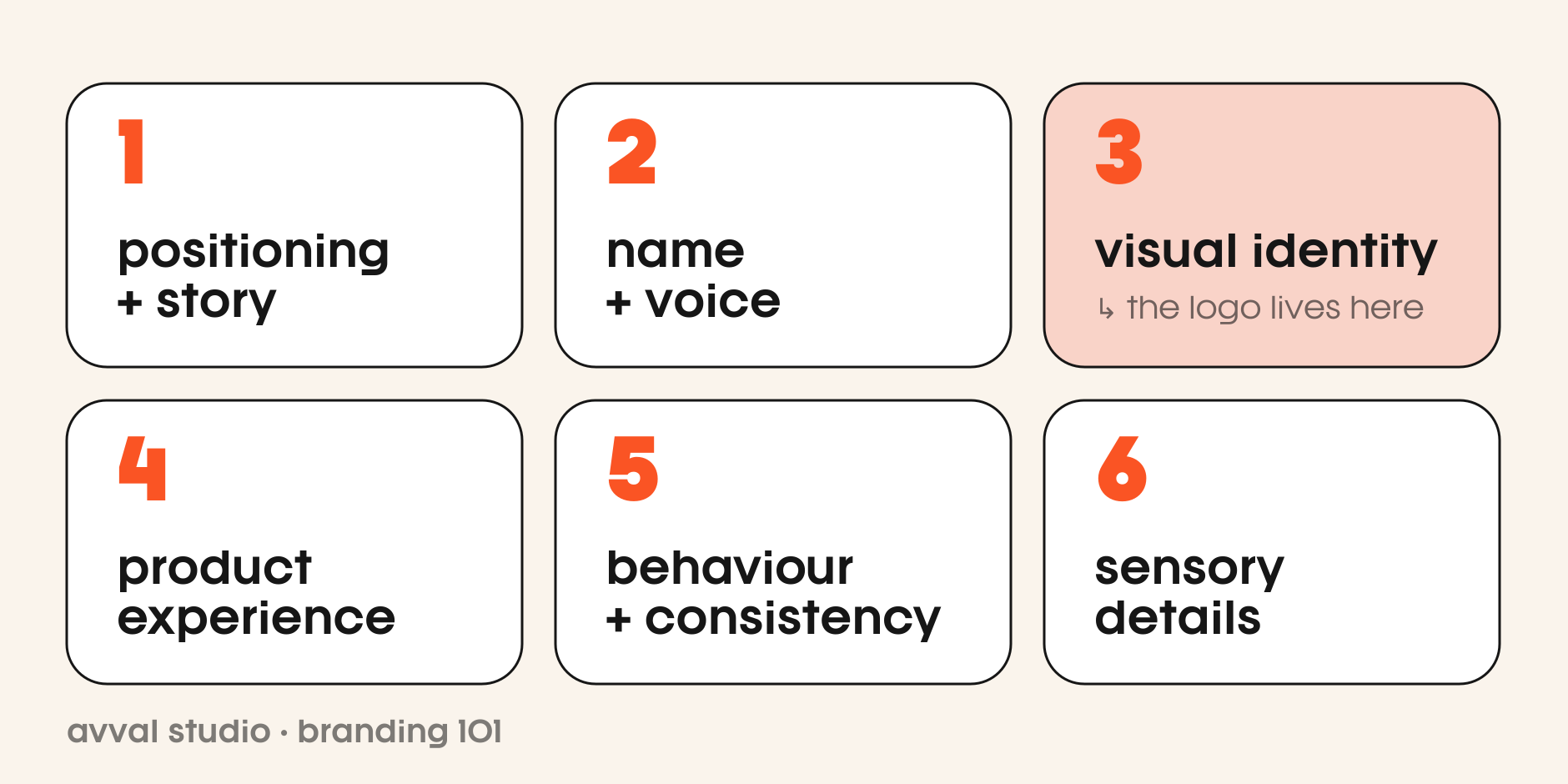
1. positioning and story
The decision underneath every other decision: who the brand is for, what it replaces, and why it exists. If this fits on a sticky note, everything downstream gets easier and cheaper. If it doesn't exist, no amount of design will compensate.
2. name and voice
What you're called and how you sound — in headlines, in error messages, in the way you decline a refund. Voice is the most underused identity asset in India: most brands in a category sound identical, so sounding like yourself is cheap differentiation.
3. visual identity
The system most people mistake for the whole: logo, palette, type, imagery rules, layout grammar. Done well it's a kit any designer can build with tomorrow, not a single hero file. This is where our identity work usually produces the most visible before-and-after. The Sawa Sawa rebrand is a clean example — one system holding across identity, signage, menu, and web.
4. product and service experience
What it's actually like to buy from you, unbox you, complain to you. Identity that lives only in marketing collapses at the first customer-support email. The experience either proves the promise or quietly refutes it.
5. behaviour and consistency
The discipline of repeating yourself when you're bored of it. Markets need roughly ten times more repetition than founders have patience for. Consistency is also the element with the clearest financial case — more on that below.
6. sensory details
The underrated one: the rip of the tape, the weight of the box, the two-note sound in the app, the smell of the store. Small sensory signatures compound into recognition that competitors can't screenshot.
why identity pays for itself
Recognition lowers the cost of every future sale. A customer who recognises you doesn't need to be re-convinced from zero — your ads work harder, your shelf presence works harder, your word-of-mouth survives retelling.
There's a number on this. The State of Brand Consistency report — a Lucidpress survey of over 400 organisations — found that consistent brand presentation can lift revenue by up to 33%. The mechanism isn't magic: consistency compounds, and inconsistency resets the counter.
The internal effect is just as real. A written identity ends the weekly debates about how things should look and sound. Decisions that took meetings start taking minutes.
identities we point to
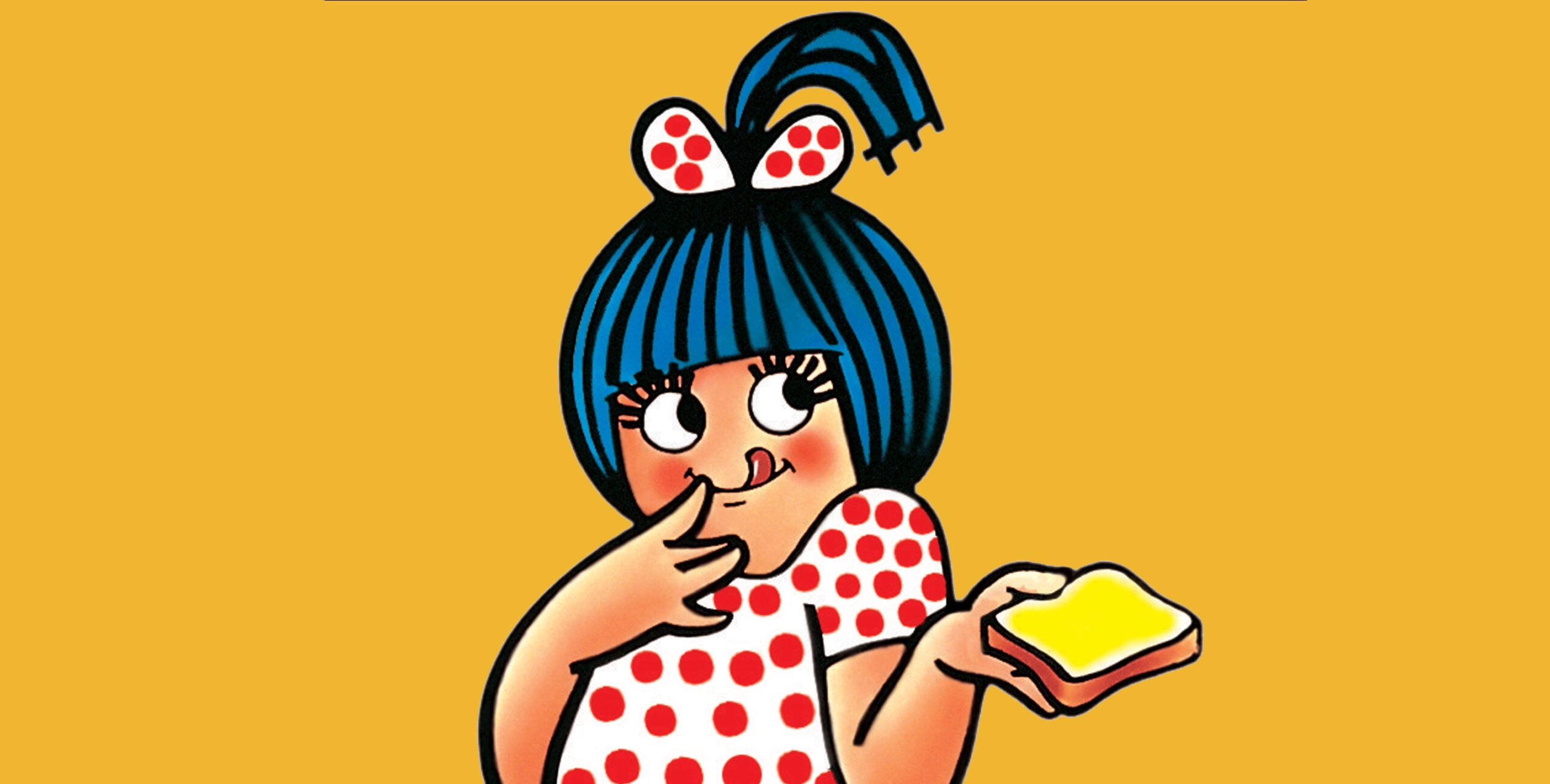
Amul has run the same butter-girl campaign since 1966 — the longest-running outdoor campaign in the world. The topical wit is the identity; the hoarding is just the container. Six decades of one voice, and every Indian can finish the sentence.
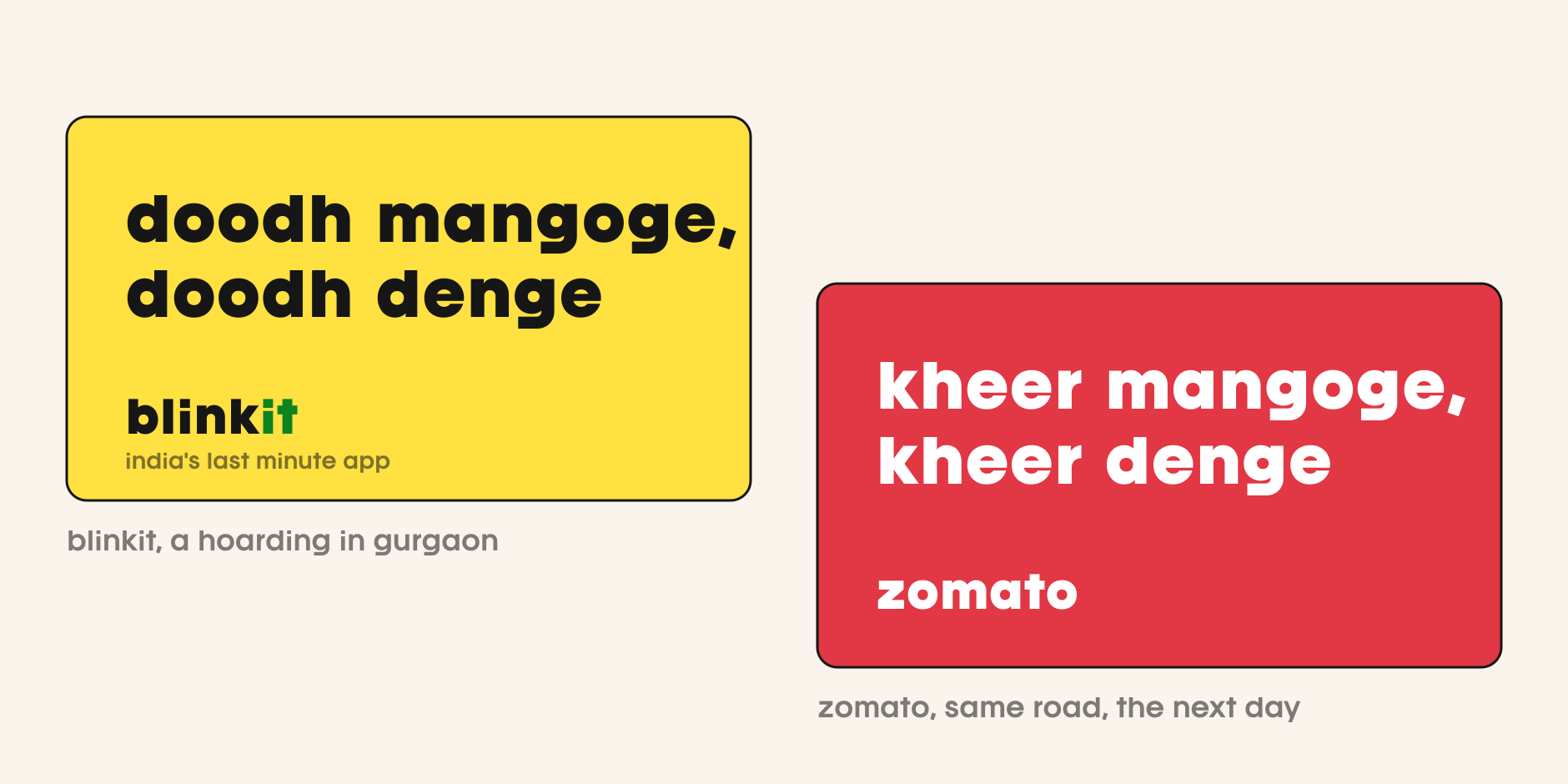
Zomato built a national brand on tone alone for years — push notifications and billboards in a voice so distinct that screenshots of their copy became free distribution, and other brands started replying in kind. That's element two doing the work of a media budget.
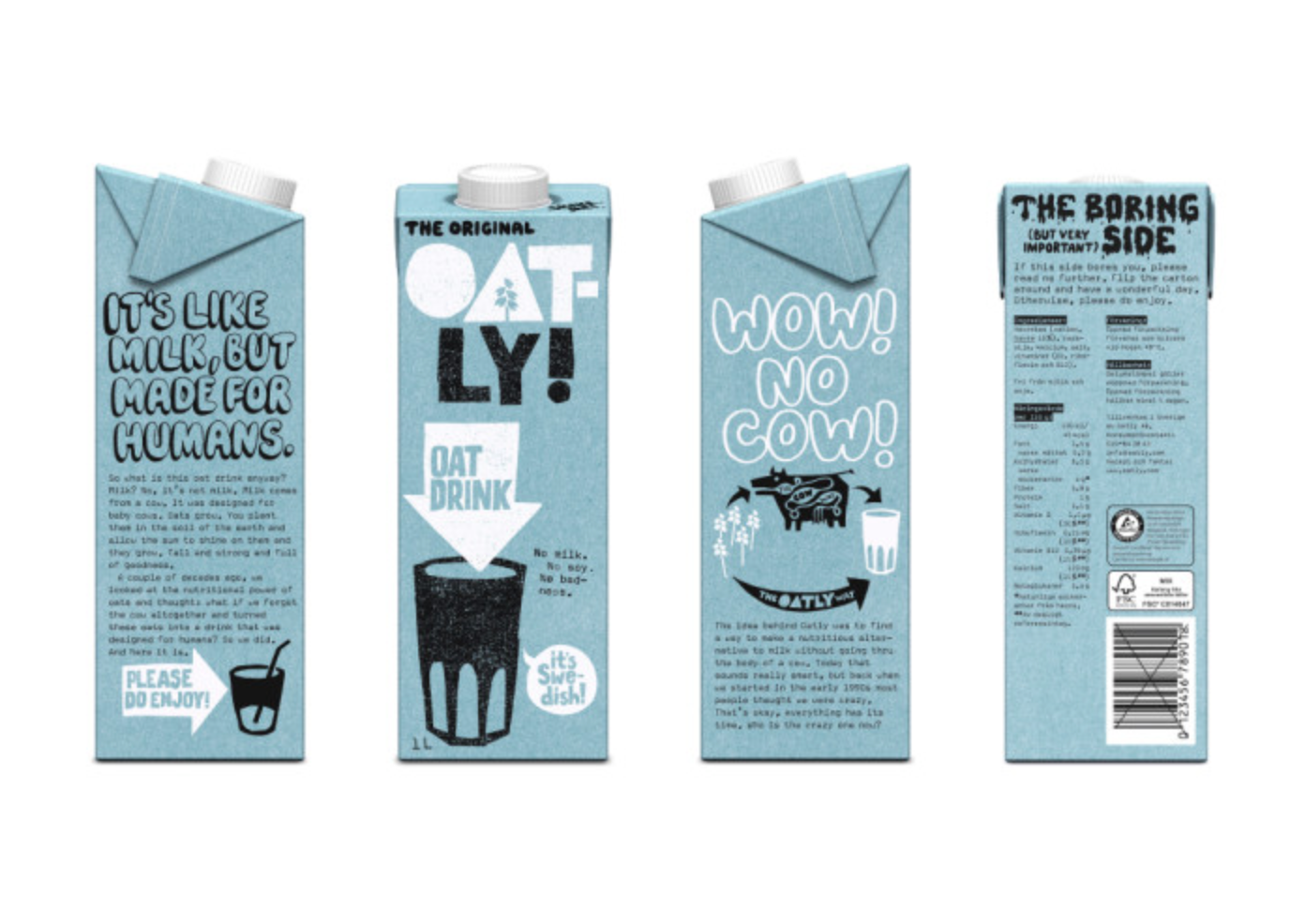
Oatly turned the side of a carton into a media channel: self-aware, argumentative copy on every surface they own — they literally label one panel "the boring side". People photograph their packaging. When your identity is strong enough, your customers run your ads.
where to start (without burning money)
You don't need a six-month engagement to begin. You need decisions, in order:
- Write the positioning sentence: who it's for, what it replaces, why you. One sentence, argued over properly.
- Pick the three words your brand should sound like — and the three it never should.
- Audit what you already project: screenshot every customer touchpoint and read them as a stranger. The gaps will be obvious.
- Only then brief the visual system — with the first three steps as the brief.
If you'd rather see what that produces before committing, the work is the honest portfolio of this process — and our services page explains how we run it.
quick answers
is brand identity just a logo?
No. The logo is one output of the visual-identity element, which is itself one of six elements. A brand can survive a mediocre logo with a strong identity; the reverse rarely holds.
what's the difference between brand identity and brand image?
Identity is what you intend to project; image is what the market actually perceives. You build identity directly and earn image over time through consistency.
what are the elements of brand identity?
Six, in our model: positioning and story, name and voice, visual identity, product experience, behaviour and consistency, and sensory details.
what does brand identity design cost in india?
Anywhere from ₹50,000 for a freelancer's logo-and-palette package to ₹15 lakh+ for a full agency system. The honest variable isn't the deliverables — it's how much strategy happens before design. Scope the thinking, not just the files.
“Every business already projects something. Identity work is deciding what that something is, instead of letting it happen by accident.”


got a project in mind?
we turn thinking like this into brands that actually ship. tell us what you’re working on.